
flat pack containers mainly used for
The use of flat pack containers has grown significantly over the past decade as industries, governments, and individuals search for flexible, cost-effective, and portable solutions to meet a wide range of needs. Unlike traditional shipping containers, which are bulky and costly to transport in large numbers, flat pack containers are designed to be disassembled into compact parts and transported efficiently. Once delivered, they can be quickly assembled on-site to serve a variety of functions. This combination of portability, durability, and versatility has made them a practical choice in many fields. A common question many people have is what are flat pack containers mainly used for, and the answer reveals how adaptable these units truly are.
One of the most common uses of flat pack containers is in the construction industry. At construction sites, companies often require temporary offices, worker housing, storage spaces, and sanitation facilities. Traditional structures take time to build and are impractical for short-term projects. Flat pack containers, on the other hand, can be delivered in bulk, set up quickly, and dismantled just as easily when the project is complete. This allows construction companies to save both time and money while still providing functional and comfortable facilities for their teams.
Flat pack containers are also widely used for housing solutions, both temporary and long-term. In areas where affordable housing is scarce, these containers can be transformed into comfortable homes equipped with insulation, plumbing, and electricity. Their modular design allows multiple units to be combined into larger living spaces, offering flexibility to meet different family sizes and needs. In emergency situations, such as after natural disasters, flat pack containers provide an immediate solution for displaced families who need safe shelter quickly. Their ability to be deployed in large numbers and assembled rapidly makes them invaluable for humanitarian aid organizations.
Another major application of flat pack containers is in the events and entertainment industry. Festivals, exhibitions, and sporting events often require temporary ticket booths, first-aid stations, storage rooms, and food stalls. Setting up permanent infrastructure for events that last only a few days or weeks is inefficient, so flat pack containers offer the perfect balance of practicality and efficiency. They can be customized with branding, lighting, and ventilation to create professional spaces that enhance the experience for both staff and attendees. Once the event concludes, the containers can be dismantled and reused at future venues.
The retail industry has also embraced flat pack containers as a modern solution for pop-up shops and mobile showrooms. Businesses can set up these containers in high-traffic areas to sell products or showcase new collections without committing to expensive permanent retail space. The containers can be designed to reflect a brand’s identity and then relocated to different locations as marketing campaigns evolve. For startups and small businesses, this provides a cost-effective way to test new markets and reach customers in unique, eye-catching ways.
Education is another sector where flat pack containers have become highly valuable. In regions where schools are overcrowded or infrastructure is lacking, containers can be converted into classrooms, libraries, or administrative offices. Their rapid assembly means that learning facilities can be created in weeks instead of years, ensuring students have access to education even in challenging circumstances. Because the units can be relocated, they can adapt to the changing needs of growing communities.
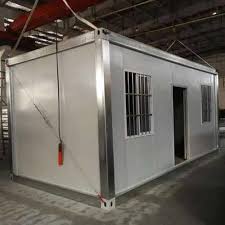
What are flat pack containers mainly used for?
Healthcare has seen increasing use of flat pack containers as well. They have been turned into mobile clinics, testing centers, vaccination units, and even small hospitals. During the COVID-19 pandemic, for instance, many countries used flat pack containers to expand healthcare capacity quickly and safely. Their sturdy design allows for proper installation of medical equipment, climate control systems, and sanitary facilities, creating professional environments where healthcare services can be provided reliably.
Flat pack containers are also widely used in the military and defense sector. Military operations often take place in remote areas where establishing permanent infrastructure is impractical. Containers provide an efficient way to create barracks, command centers, kitchens, and medical stations. Their modular and portable design ensures that bases can be set up quickly and then moved as operations change. The durability of flat pack containers makes them suitable for harsh conditions, which is why they are a preferred choice for armed forces around the world.
Industries such as mining and oil exploration rely on flat pack containers for similar reasons. These sectors often operate in isolated regions where housing, storage, and offices are needed but cannot be built traditionally. Containers provide a practical solution by offering strong, weather-resistant, and portable facilities that can be relocated as exploration sites shift. This reduces costs and provides greater flexibility for companies that work in environments far from established infrastructure.
In addition to industrial and institutional uses, flat pack containers are becoming popular among individuals seeking alternative housing or workspace solutions. Many people use them to create backyard offices, workshops, or guesthouses. Their affordability and ease of installation make them attractive for personal projects where flexibility and cost control are important. The growing trend of minimalism and sustainable living has also contributed to the popularity of using these containers for small, efficient homes.
In conclusion, flat pack containers are mainly used for construction site facilities, emergency housing, event infrastructure, retail spaces, education, healthcare, military operations, and remote industrial projects such as mining and oil exploration. Their ability to be transported easily, assembled quickly, and adapted for different purposes makes them one of the most versatile solutions available today. Beyond their industrial and commercial applications, they are also becoming part of personal housing and lifestyle trends, proving their adaptability across nearly every sector. As global demand for efficient and flexible infrastructure continues to grow, flat pack containers are set to play an even greater role in shaping the way people live, work, and respond to changing needs.